Third of a three-part series, Your Home for Life, published in Quepolandia Magazine (https://www.quepolandia.com/).
Life on a tropical coast is closely tied to water, naturally. We rinse off after the beach, shower in the garden, swim before breakfast, change several times a day, and walk barefoot across tiled floors at all hours. That’s one of the coast’s great pleasures. It’s also why showers, bathrooms, pool entries and tiled entrances are worth a close look.
Over the past two articles, we’ve walked from the car to the door and through the interior of the home—lighting the path, smoothing the way, thinking about thresholds, stairs and corridors. Now, let’s consider the spaces where many household injuries occur: anywhere that bare feet meet wet surfaces.
Where you walk
Keeping surfaces clean matters most of all. The coast’s humidity means tile, concrete and wood can develop slippery mildew or algae that literally throws you for a loop—so check in regularly on the need for scrubbing or pressure washing. A good caretaking schedule will help you remember before it becomes a hazard.
Beyond maintenance, there’s a lot you can do to slow the problem down. Textured or matte-finish tile, exposed aggregate concrete, and teak all maintain grip even when biofilm begins to form. Regular application of an anti-algae sealant on grout and concrete reduces how quickly the surface deteriorates. And improving drainage and airflow—sometimes as simple as trimming a tree so the sun reaches a path—makes a real difference.
Where you wash
A few thoughtful changes transform a standard bathroom into one that’s safe and much more comfortable for everyone who uses it. A curb-free, or low-threshold, shower eliminates the step that catches toes and ankles—and makes cleaning the room far easier. Installing towel rods or hooks close to the shower reduces splashes on the floor.
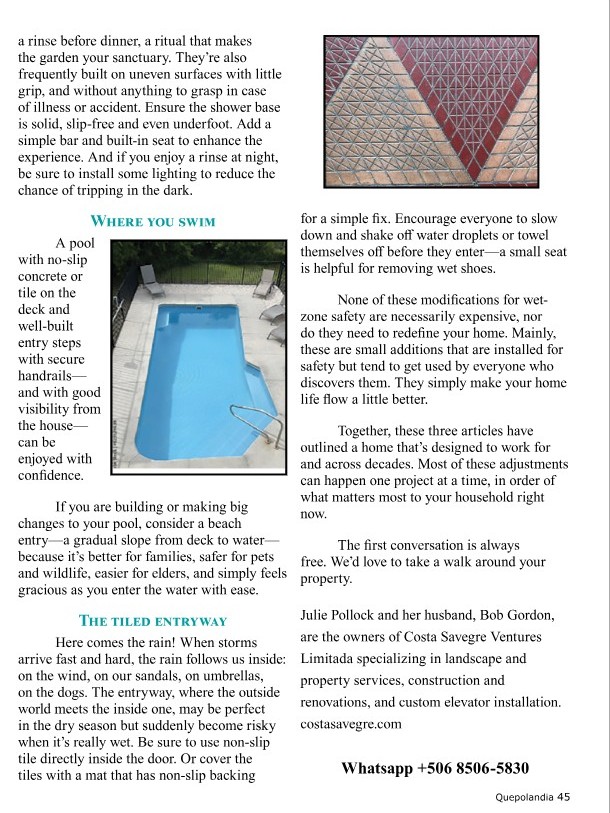
Grab bars in the shower and beside the toilet support stability for elders and anyone feeling ill or light-headed. In the shower, you’ll find that non-slip tile, a teak bench and a handheld showerhead on a slide bar simply makes the room work better for you, for guests and family of all ages.
Where you chill out
Outdoor showers are one of the joys of coastal living—a cool-down after a workout, a rinse before dinner, a ritual that makes the garden your sanctuary. They’re also frequently built on uneven surfaces with little grip, and without anything to grasp in case of illness or accident.
Ensure the shower base is solid, slip-free and even underfoot. Add a simple bar and built-in seat to enhance the experience. And if you enjoy a rinse at night, be sure to install some lighting to reduce the chance of tripping in the dark.
Where you swim
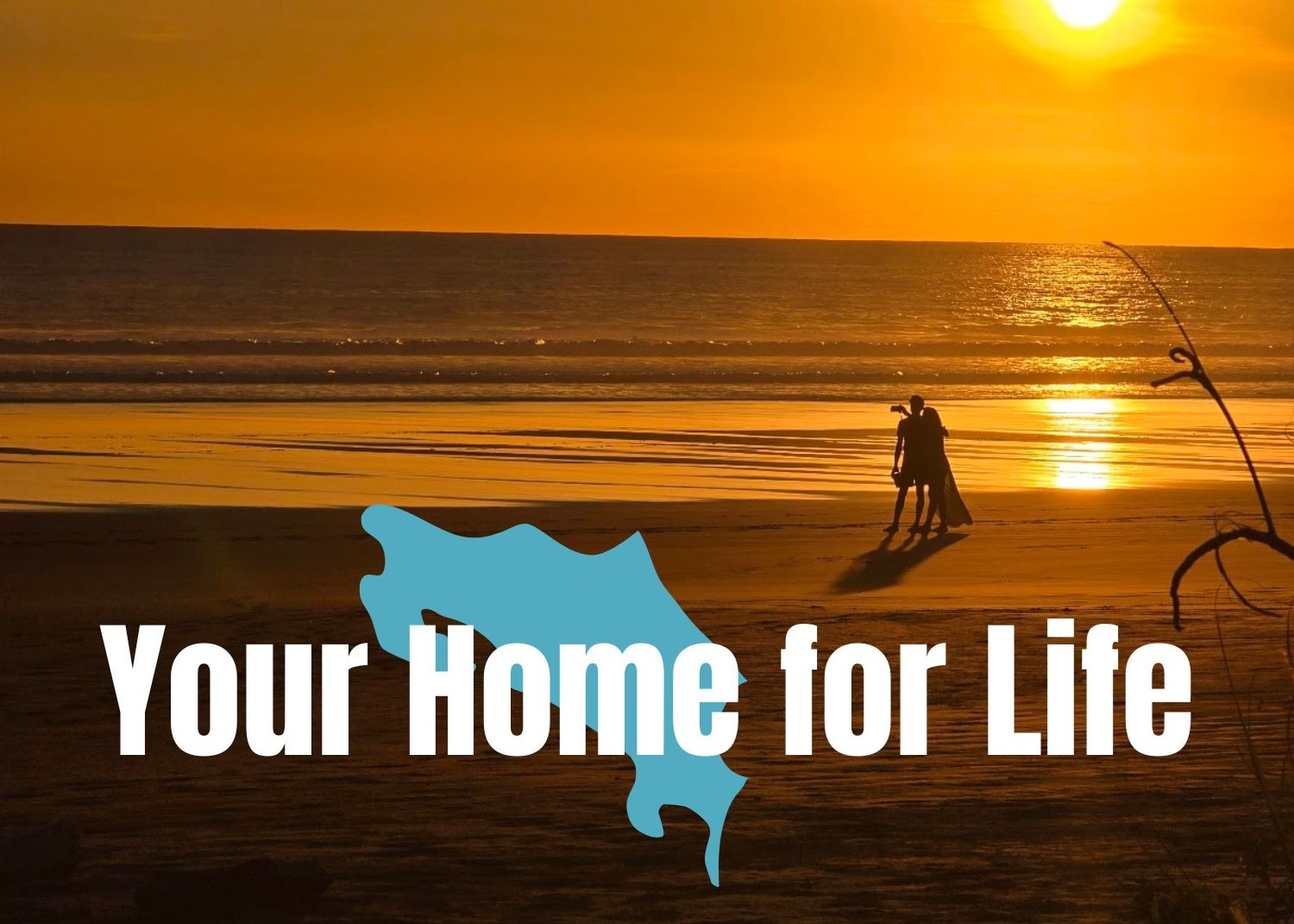
A pool with no-slip concrete or tile on the deck and well-built entry steps with secure handrails—and with good visibility from the house—can be enjoyed with confidence. If you are building or making big changes to your pool, consider a beach entry—a gradual slope from deck to water—because it’s better for families, safer for pets and wildlife, easier for elders, and simply feels gracious as you enter the water with ease.
The tiled entryway
Here comes the rain! When storms arrive fast and hard, the rain follows us inside: on the wind, on our sandals, on umbrellas, on the dogs. The entryway, where the outside world meets the inside one, may be perfect in the dry season but suddenly become risky when it’s really wet. Be sure to use non-slip tile directly inside the door. Or cover the tiles with a mat that has non-slip backing for a simple fix. Encourage everyone to slow down and shake off water droplets or towel themselves off before they enter—a small seat is helpful for removing wet shoes.
None of these modifications for wet-zone safety are necessarily expensive, nor do they need to redefine your home. Mainly, these are small additions that are installed for safety but tend to get used by everyone who discovers them. They simply make your home life flow a little better.
Together, these three articles have outlined a home that’s designed to work for and across decades. Most of these adjustments can happen one project at a time, in order of what matters most to your household right now.
The first conversation is always free. We’d love to take a walk around your property.
Previous article: Moving Through Your Home
Julie Pollock and her husband, Bob Gordon, are the owners of Costa Savegre Ventures Limitada specializing in landscape and property services, construction and renovations, and custom elevator installation. costasavegre.com